Photographing Phuket: Viewpoints, Old Town or the Islands?
Updated September 17, 2026 · 8 min read
Phuket offers three genuinely different photographic subjects, and the mistake most visitors make is trying to get all three out of the same day. They are on opposite sides of a 50 km island, they peak at different hours, and two of them are best in seasons the other one is not.
Here is how they divide, and what the bookable options are actually worth.
The three subjects
| Subject | Where | Best hours | What decides the shot |
|---|---|---|---|
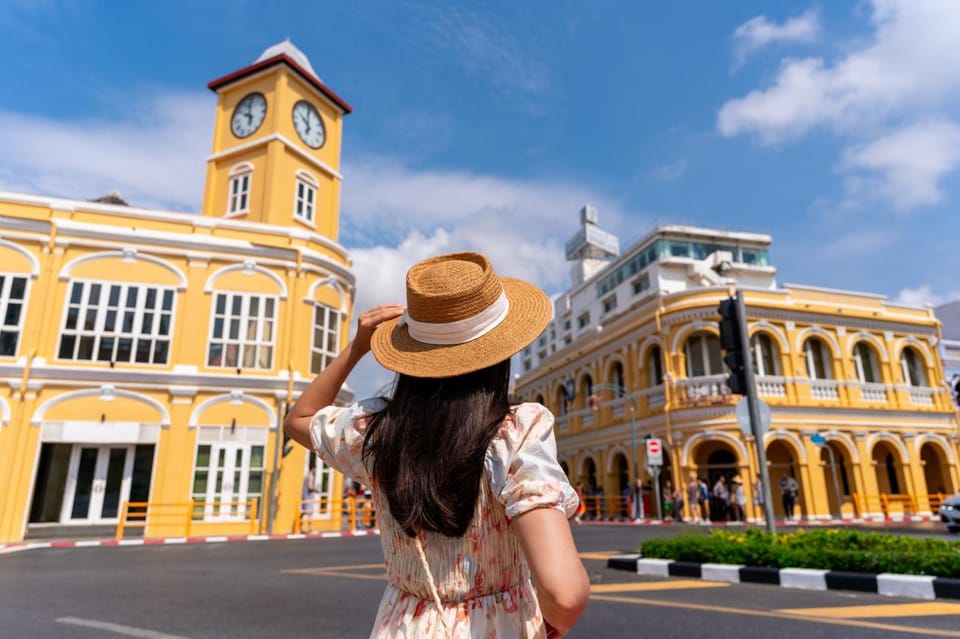
| Sino-Portuguese old town | East coast, Phuket Town | Early morning, or the hour before sunset | Colour and shade, not sunlight |
| Viewpoints and coastline | South of the island | Late afternoon into sunset | Where the sun sets relative to the bay |
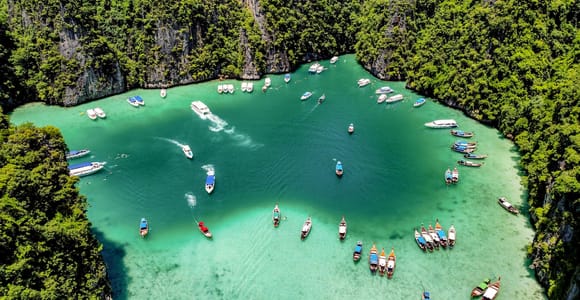
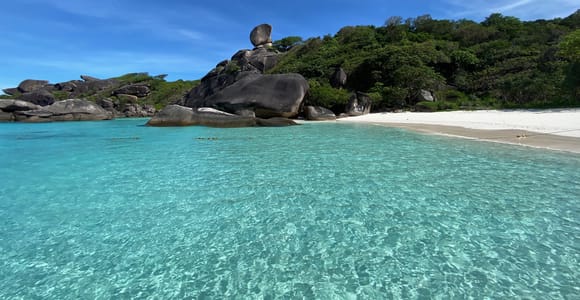
| Limestone islands | Phang Nga Bay, Phi Phi | Whenever the boat is there | The boat’s schedule, not yours |
The third row is the one to absorb. On an island day you do not choose your light. The boat leaves at the operator’s hour and reaches the good scenery in the middle of the day, which is the harshest light there is. If limestone karst in soft light is the photograph you want, the sunrise and sunset boat departures are the only realistic route to it – our overview of what to see in Phuket covers which trips leave when.
The old town: the easiest subject on the island
The protected quarter is seven streets – Thalang, Dibuk, Krabi, Phang Nga, Yaowarat, Ranong and Soi Romanee – and the whole thing fits inside a fifteen-minute walk. That compactness is a photographic gift: you can work a street, wait for the light to move, and walk to the next one.
- Soi Romanee, the short lane between Dibuk and Thalang, is the most photographed row on the island. It is also narrow, so it fills quickly in late afternoon.
- Thalang Road has the best-kept façades. On Sundays it closes to traffic from about 15:00 and becomes the Walking Street market from 16:00 to 22:00 – which replaces one subject with another. Market photography, not architecture.
- Dibuk Road is the working-street version, with far fewer people pointing cameras at it.
- The five footways – the arcaded walkways in front of the shops – give you continuous shade and a ready-made repeating frame. They are the reason the old town is workable at midday when the coast is not.
Interiors: the Thai Hua Museum on Krabi Road, in a 1934 mansion, charges 200 THB entry and a further 200 THB for a photo pass if you want to photograph inside. Open 09:00 to 17:00, closed Mondays. Budget for the second 200 THB rather than being surprised by it.
For the background that makes the buildings legible, see our architecture guide.
The viewpoints: two, and they are not interchangeable
Both are free, both have free parking, and they face different directions.
Karon Viewpoint looks north over three bays. It is at its best in the late afternoon as the light warms, and it is not really a sunset spot – the sun goes down to the side of the view rather than into it. In the December-to-February high season its car park fills from late afternoon; arriving before 16:00 makes the parking easier.
Promthep Cape at the southern tip faces west over open water and is the island’s classic sunset location. Which is exactly the problem: coach traffic arrives in waves in the late afternoon through the high season, and between roughly 17:30 and 18:45 you are photographing over other people’s heads. Early morning at the cape is almost empty and the view is the same view, differently lit.
Several city tours build a viewpoint run into the afternoon – Sunset, Old Town & Night Market Tour, from €29.77 over 5 hours with 4.2 stars from 53 reviews, runs Karon Viewpoint to Promthep Cape and then into the old town. That is efficient, and it is also a schedule: you get the cape when the van arrives.
Booking a photographer: read the duration
There is a small market of private photoshoots on Phuket, and the durations are short. From our inventory of GetYourGuide offers on 17 September 2026:
| Listing | From | Duration | Rating | Reviews |
|---|---|---|---|---|
| Phuket Old Town: Private Photoshoot | €58.36 | 30 minutes | 4.8 | 5 |
| Private Photoshoot at Old Town | €117.80 | 30 minutes | 5.0 | 1 |
| Couple photoshoot at Surin Beach | €160.55 | 1 hour | 5.0 | 10 |
| Professional photographer at your own resort | €151.05 | 1 hour | 5.0 | 15 |
Thirty minutes is a session, not an afternoon – and on the old town listings it will cover one or two streets. The questions worth asking before booking are always the same: how many edited images are included, how are they delivered, and how long after the shoot? Those three lines are what you are actually buying, and they are more often in the operator’s answer than in the listing. With review counts between 1 and 15, the descriptions carry more weight than the stars.
Drones: the rule that catches people out
This is the section to read if you packed one.
Thailand requires drone registration with two authorities: the Civil Aviation Authority of Thailand (CAAT) and the National Broadcasting and Telecommunications Commission (NBTC). The threshold is low – broadly, drones over 250 g or carrying a camera – which covers almost every consumer model worth travelling with. There is no tourist exemption for short visits or recreational flying.
Two practical obstacles follow:
- You cannot complete registration before you arrive. The process expects an immigration entry stamp, and account verification uses a one-time code sent to a Thai mobile number, so a Thai SIM is part of it.
- Since 2025 the CAAT side also involves a pilot competency test, which adds time you probably have not budgeted for on a one-week holiday.
Penalties published for flying unregistered are not nominal: figures in the region of 40,000 THB and up to a year’s imprisonment on the CAAT side, and up to 100,000 THB and five years for the unregistered transmitter under NBTC rules. Enforcement has been tightened during 2026. None of this is legal advice and the rules move – check the current requirements with the CAAT directly before you travel, not with a blog.
If you want aerial footage without any of that, hiring is the simple route. One listing in our inventory sells exactly that – Ma Doo Bua skip-the-line for drone photos or videos, from €83.57 for 1 hour – though it carries 2.4 stars from three reviews, which is a weak basis either way. Read what is included before booking.
Two courtesies
At the temples. Wat Chalong (07:00–17:00) and the Big Buddha (09:00–18:00, reopened on 3 March 2026 after the August 2024 landslide closure) are both free to enter and both require shoulders and knees covered. They are places of worship in use; photograph the buildings, not people at prayer, and put the camera down inside the ordination hall if anyone is praying.
In the old town. The conservation streets are residential. The frontages are fair game; the people behind them are not, unless you ask.
Planning it as a trip
If you have three days and want all three subjects, the order that works is: old town on a weekday morning, viewpoints on a late afternoon that ends at the cape, and an island day with a sunrise or sunset departure. Trying to combine the old town and the cape into one afternoon is possible – see the night market tour for what that schedule looks like – but you will be photographing on somebody else’s clock. For a route you set yourself, see private tours.